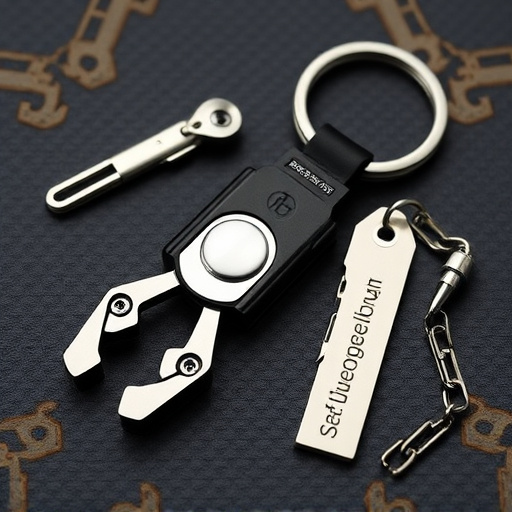
Carrying a keychain weapon for personal safety requires mastering the Proper Keychain Striking Form Technique. This technique involves learning correct grip, stance, and strike angles to deliver powerful yet precise strikes while avoiding harm. Integrating advanced features like automatic locking mechanisms and smart sensors, along with rigorous training, ensures users can rely on their keychain weapons effectively and safely for self-defense in various scenarios. Regular practice refines movements and enhances precision, fostering muscle memory for confident, instinctive reactions.
In today’s world, personal safety is paramount. Portable keychain weapons offer a discreet self-defense solution, but proper use is crucial. This article explores the vital aspects of keychain weapon safety, focusing on the key Proper Keychain Striking Form Technique. We’ll delve into essential training and design considerations, from understanding the importance of safety features to integrating advanced functionalities. By the end, readers will be equipped with knowledge to defend themselves effectively and responsibly.
- Understanding the Importance of Keychain Weapon Safety
- Mastering the Art of Proper Keychain Striking Form
- Integrating Advanced Safety Features into Your Keychain Design
- Training and Practice for Effective Self-Defense with a Keychain Weapon
Understanding the Importance of Keychain Weapon Safety
Carrying a weapon on your keychain may seem like a convenient way to ensure personal safety, but it’s crucial to understand that proper handling and technique are paramount. The last thing anyone wants is for a well-meant self-defense tool to slip or be used incorrectly, leading to unintended consequences. This is where the concept of a “Proper Keychain Striking Form Technique” comes into play—it’s not just about having a compact weapon on your keyring, but also mastering how to deploy and use it effectively without causing harm to yourself or others.
Training in proper striking form ensures that you can utilize the weapon’s full potential while minimizing risks. This includes learning the correct grip, stance, and strike angles to deliver maximum impact with minimal recoil. By focusing on these aspects, users can transform a small keychain weapon into a reliable tool for self-defense without compromising safety or precision.
Mastering the Art of Proper Keychain Striking Form
Mastering the art of proper keychain striking form is a crucial aspect of ensuring both effectiveness and safety when using a portable keychain weapon. The technique involves a precise, controlled motion that allows for powerful strikes while minimizing the risk of injury to yourself or others. By focusing on balance, grip, and alignment, users can deliver impactful blows without compromising their stability.
The key lies in adopting a stable stance with feet shoulder-width apart, enabling full body weight to be transferred during each strike. Gripping the keychain firmly yet gently, with fingers curled around the handle, ensures control and precision. Aligned correctly, the weapon should extend straight from the hand, aiming directly at the intended target. Practicing these foundational elements allows users to develop a fluid, natural motion, transforming what could be a simple keychain into a versatile self-defense tool while maintaining proper keychain striking form technique.
Integrating Advanced Safety Features into Your Keychain Design
When designing a portable keychain weapon, safety should never be an afterthought. Integrating advanced safety features ensures that users can rely on their device in stressful situations while minimizing the risk of accidental harm. One crucial aspect is mastering the proper keychain striking form technique. This involves precise grip and control to deliver effective strikes without causing injury to oneself or others. By focusing on this fundamental skill, users can maximize the potential of their keychain weapon while adhering to responsible carrying practices.
Additionally, modern technologies offer innovative safety mechanisms that complement the physical design. For instance, incorporating automatic locking mechanisms ensures the weapon remains secured until intended use. Smart sensors capable of detecting improper handling or unexpected impact can trigger safety protocols, preventing accidental deployment. These features, combined with proper training in striking techniques, create a comprehensive safety framework for any keychain weapon.
Training and Practice for Effective Self-Defense with a Keychain Weapon
Training and practice are paramount when it comes to using a keychain weapon for self-defense. It’s crucial to learn the proper keychain striking form technique to ensure maximum effectiveness and minimize risks. This involves mastering basic strikes, such as punches, kicks, and knifing motions, adapting them to fit the compact size of the keychain weapon. Regular exercises in front of a mirror or with a training partner can help you refine your movements, improving both precision and power.
Beyond physical practice, understanding when and how to deploy the keychain weapon is equally important. This includes learning various self-defense strategies and scenarios that allow for swift and efficient use of the device. Continuous training sessions should focus on developing muscle memory, so in a real-life situation, you can react instinctively and confidently.
In conclusion, mastering the art of self-defense with a portable keychain weapon requires understanding safety features like advanced locking mechanisms and proper striking form technique. Regular training and practice are essential to ensure effectiveness in real-life situations. By integrating these key aspects into your keychain design and routine, you can create a powerful and safe self-defense tool that offers peace of mind in today’s world.